Buying guides
Commercial vs residential zero-turn mowers: is the upgrade worth it?
If you mow for customers most days, a commercial zero-turn mower is a sensible place to start. For your own property, a residential or acreage model may be a better fit for your budget.
Two mowers can have the same cutting width and almost identical horsepower, yet quite different equipment underneath. Look at what the upgrade actually buys, how much mowing you'll do and who can help when the machine needs attention.
Start with your mowing workload
Start with a busy week. Write down your mowing hours and the number of properties you look after, along with any tight access, rough ground or grass conditions the mower needs to handle. CutandClean TV’s dealer interview takes the same approach: match the equipment to the work before talking about budget. That advice applies here in Australia too.
Say you mow two hours a week for 30 weeks. That's 60 hours a year. Fifteen hours a week for 40 weeks adds up to 600 hours. These are hypothetical workloads, not manufacturer ratings or a rule for when to buy commercial. They show why acreage is only part of the picture: mowing an area occasionally at home is a different workload from covering it repeatedly on a contractor's round.
For paid work, think about downtime as well. Before buying, talk to the dealer about workshop bookings, common parts and backup options if the mower is out of action.
What changes when you step up to a commercial mower?
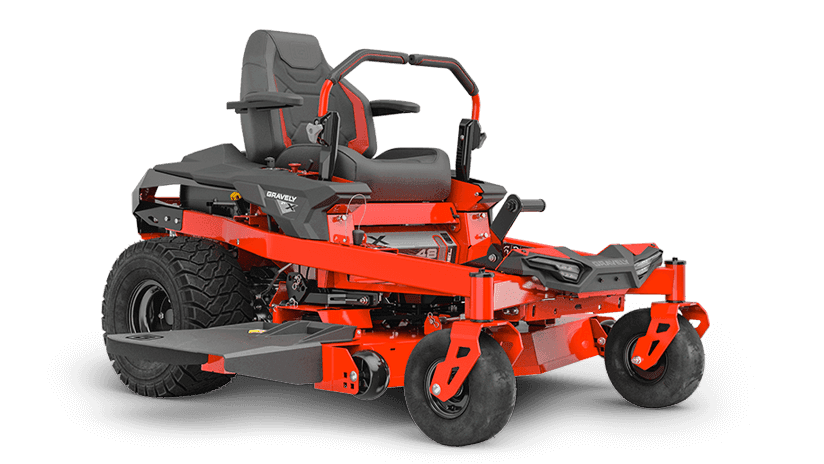
Look beyond the engine to the deck, transmission, seat and access for servicing. A fabricated deck alone doesn't make a mower commercial. Gravely's Australian ZT X 48 is aimed at homeowners and already has one.
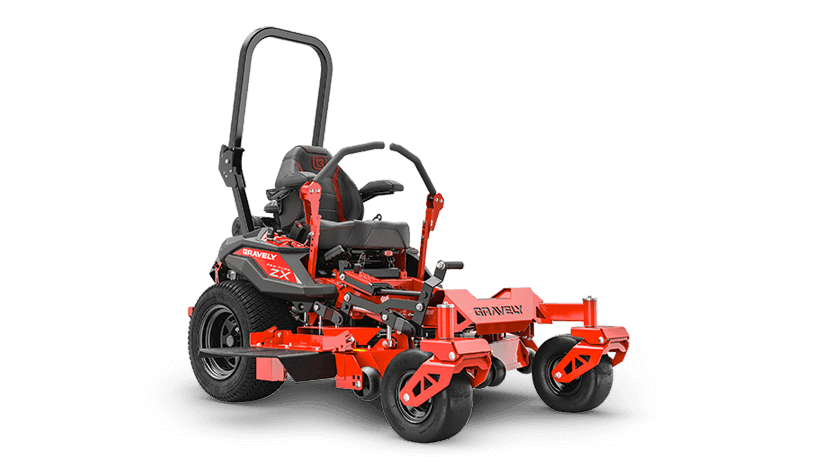
The ZT X 48 and Pro-Turn ZX 48 both have a 48-inch cutting width. Their published Australian specifications show where they differ:
| Feature | Gravely ZT X 48 | Gravely Pro-Turn ZX 48 |
|---|---|---|
| Cutting deck | Fabricated, 11-gauge steel | Fabricated, 7-gauge steel with 10-gauge spindle reinforcement |
| Drive system | Hydro-Gear EZT transaxles | Hydro-Gear ZT-3200 transaxles |
| Engine | Kawasaki FR651V, 21.5 hp | Kawasaki FX691V, 22 hp |
| Seat | High back with armrests | High back with suspension and padded armrests |
| Rollover protection | Not supplied | Standard |
| Listed mower warranty | 3 years or 300 hours (code HF) | 4 years or 750 hours (code CH) |
Source: Gravely Australia’s ZT X 48 specifications and Pro-Turn ZX 48 specifications, checked 29 October 2026. Confirm the specification of the machine being quoted.
The warranty ends when either the time or hour limit is reached. Use the warranty code on the machine's model/serial decal to confirm with the dealer which cover applies to your use. Engine and transmission cover can differ; see Gravely’s warranty statement.
The horsepower figures are almost identical. For these two mowers, the more useful differences to investigate are the transmission, deck construction and seat.
Look closely at the transmission and servicing
Howe Equipment’s buying guide warns against choosing a mower on horsepower alone. Find out which transaxle is fitted, what servicing it needs and whether the mower suits the work you have in mind.
Hydro-Gear describes the EZT as residential and the ZT-3200 as suited to light commercial work. The ZT-3200 has a larger hydraulic motor and axle, and is rated to deliver more turning force at the axle.
Those are component specifications. Neither they nor the equipment comparison above tell you how long a particular mower will last or how much it will mow.
Don't assume every residential transmission is sealed or every commercial mower needs the same servicing. For each mower on your shortlist, use the current manual and dealer advice to check oil and filter changes, access to service points and scheduled maintenance costs.
Decide who will do that work too. You need an arrangement that suits your jobs, whether you use a workshop or maintain the mower yourself within the manufacturer's instructions.
Check the warranty for the way you will use it
Read the commercial-use conditions even if you're just starting a small mowing round. Cub Cadet's Australian warranty distinguishes personal domestic use from use connected with a business or trade. The type of property alone doesn't decide the cover.
Its August 2026 warranty statement lists three years of general domestic coverage for both the ZT1/ZTS1 and ZTX5 ranges. For commercial use, it's 90 days for ZT1/ZTS1 and two years for ZTX5. These general periods exclude engines, attachments and normal wear parts, which have separate treatment.
Compare the conditions along with the number of years. Get the terms for your model and use, including hour limits, maintenance requirements and component exclusions. Manufacturer warranties are subject to their terms and sit alongside applicable consumer guarantees.
Make sure the mower fits your property and you
Measure your narrowest access point and check it against the mower's overall width. Cutting width alone won't tell you whether the whole machine fits. Check the chute arrangement and follow the operating instructions, and allow for trailer and storage space too.
Spend time in the seat before buying. Try the control reach, deck lift and seat adjustment. Beards and Bush Hogs’ buying guide also covers operator fit: the controls and seat need to suit whoever will use the mower. If possible, ask the dealer for a demo on ground similar to what you'll be mowing.
Commercial mowers still have terrain restrictions, even with rollover protection. Follow the operator manual and slope limits for your exact model. Cub Cadet publishes a specific limit for its ZTX5 60; advice about that mower doesn't change the limit for yours.
When is the commercial upgrade worth it?
For a regular mowing round, favour a machine built for that work, with warranty terms and servicing requirements that fit. Paying more can make sense if it buys features you need and support you can use. The dealer should be able to explain what you gain on your jobs. A broad promise of longer life isn't enough.
For mowing at home, put a suitable residential or acreage mower beside an entry-level commercial model. You might prefer the commercial machine's seat or service access. You might also find the residential model already does everything you need.
Compare written quotes covering the same ownership period. Include the mower, expected maintenance, delivery or transport, accessories and any cost of arranging a replacement while yours is being repaired. Only count resale value and time savings where you have estimates you can back up. The higher price tag doesn't settle which mower is better value.
Take these five questions to the dealer:
-
Does this exact model suit my weekly workload and intended use?
-
What transmission is fitted, and what servicing does it need?
-
Which warranty terms apply to my use, including component and hour limits?
-
Can I try the seating, controls and access fit before buying?
-
Who handles servicing, and how are parts and repairs arranged?
Browse zero-turn mowers on MyMowerMarket to build a shortlist. Contact the listing dealer to confirm the specifications, availability and support included in the quote.